
Through the Resilient Estuaries of the Salish Sea project, we are working to identify and restore estuaries that will provide crucial ecological hotspots as the oceans are altered from climate change.
Estuaries are formed where the freshwater from rivers meets the saltwater ocean and mixes. They are important ecosystems for both the land and sea: they provide nursery and habitat for economically and culturally important species of special concern, including salmonid species of the Salish Sea. But estuaries also face a number of threats because they are areas of high human activity and increased invasive species establishment. Shoreline modification, upstream pollution, and water vessel use result in estuarine regions being damaged from many directions. Adding to this are the current and future impacts of climate change, including sea level rise, increased sea surface temperatures, and changes in freshwater sources and timing.
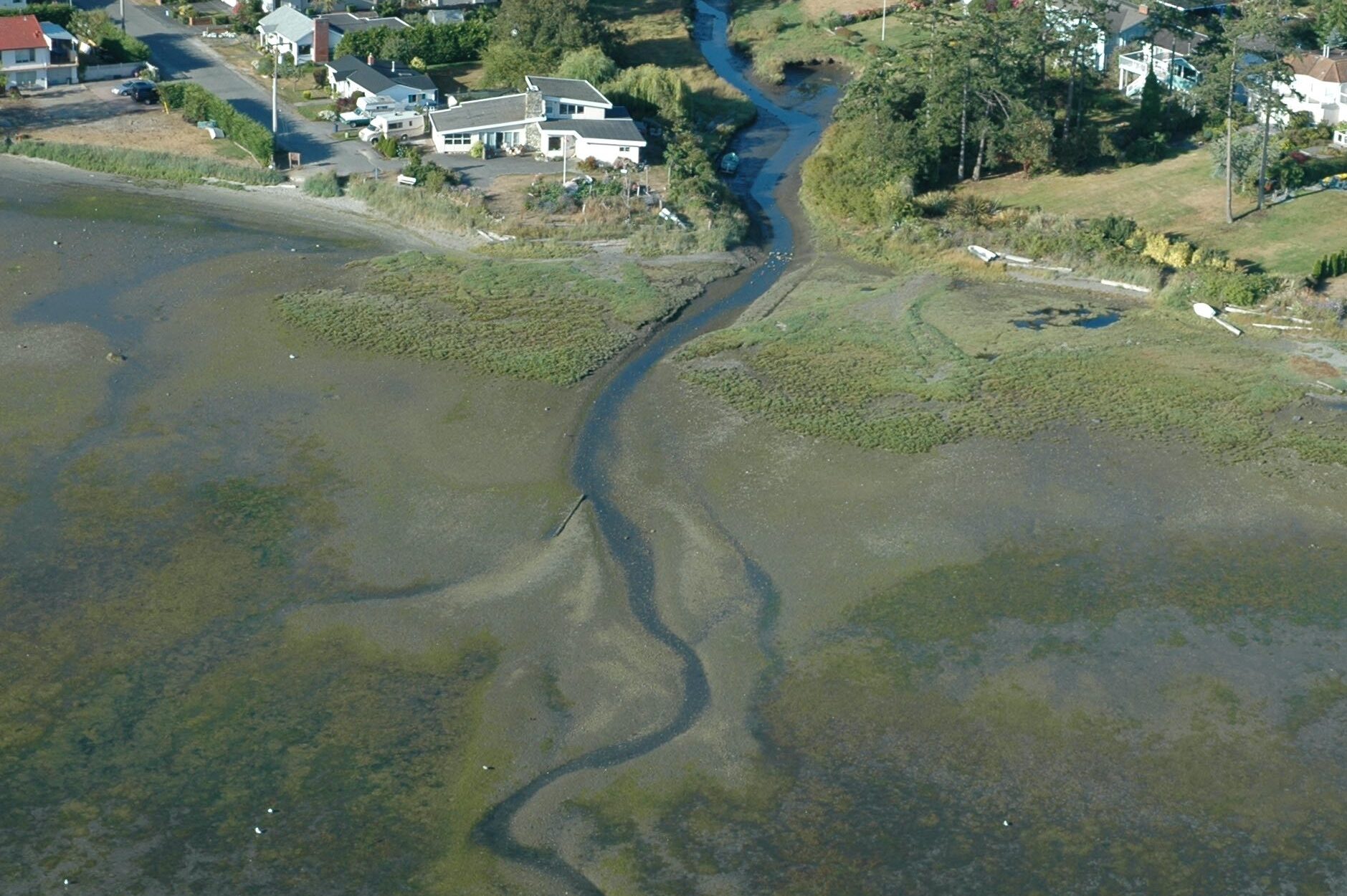
Together with our partners and collaborators, we are working to identify a network of smaller estuaries within three regions of the southern Strait of Georgia (Southern Vancouver Island, the Gulf Islands, and the Sunshine Coast) that will likely have increased resiliency with the growing impacts of climate change. We will further act to restore and conserve these critical areas now and into the future.
This project would not have been possible without the work of so many others. With our partners and collaborators, we are collecting data from a variety of existing sources, such as community projects and SeaChange’s ongoing research to track water quality and the biodiversity of invertebrates, algae, and fishes.
Explore RESS
Click here to view the RESS Map in a new tab:
Download RESS Reports
The Resilient Estuaries of the Salish Sea Phase 1 Project is funded through the BC Salmon Restoration and Innovation Fund, a contribution program jointly funded by the federal and provincial government. The Resilient Estuaries of the Salish Sea Phase 2 Project is funded through the federal government’s Aquatic Ecosystems and Restoration Fund. SeaChange is grateful for the in-kind support of the Pacific Salmon Foundation. We would not be able to undertake this work without the support of our many partners and collaborators across the Salish Sea.
SeaChange strives to ensure that all our data is open-access. We have uploaded two datasets to Zenodo, an open-access database funded by the European Union:
- Resilient Estuaries of the Salish Sea_Baseline and Monitoring Data:
- Baseline data (RESS Phase 1) and Monitoring Data (RESS Phase 2) from the RESS project
- Resilient Estuaries of the Salish Sea_Mapping Data:
- Mapping data and shapefiles for maps created through the RESS Project (Phase 1 and 2)
Through educational and outreach programs, RESS also plans to actively engage with communities by facilitating impactful connections between the public and estuary habitats. Our initiatives include organizing events like coastal cleanups and conservation career sessions for youth. Additionally, we participate in events throughout the Salish Sea to foster a deeper understanding between people and these crucial habitats.
